
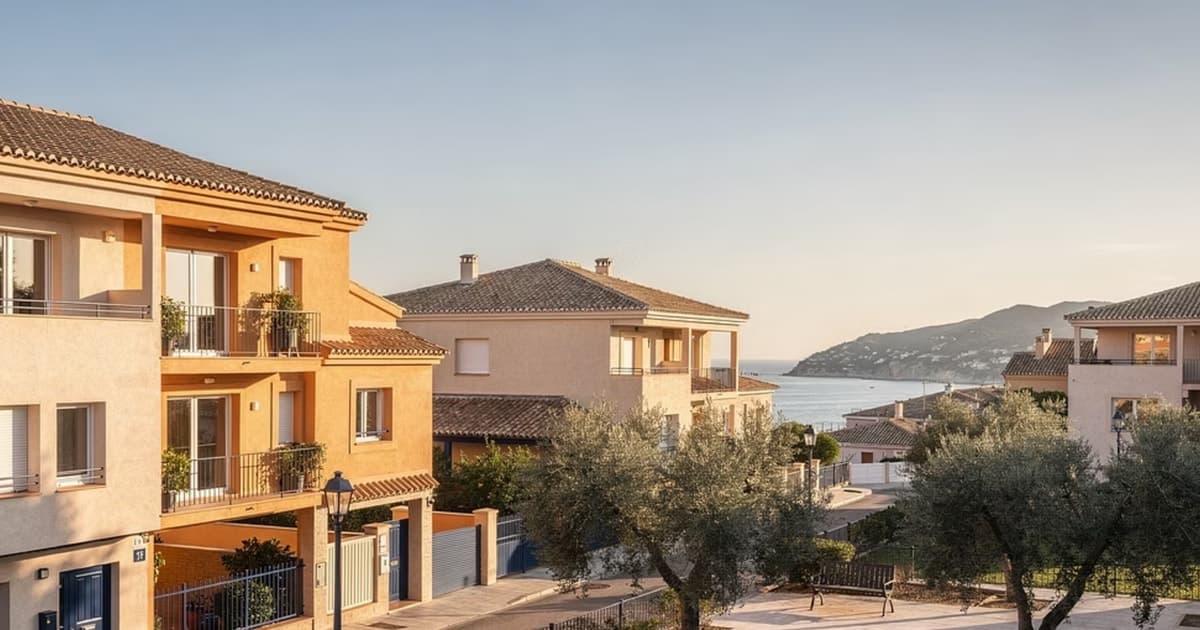
Buying a House in Spain: The Step-by-Step Guide for 2026
Key facts for buyers
Foreign nationals can buy property in Spain with no restrictions. Planning ahead and understanding the process makes the experience straightforward. This guide covers every step.
Get personalised buying adviceSpain consistently attracts international buyers drawn by its climate, lifestyle and relative affordability compared to other Western European markets. The buying process is well established but differs significantly from Northern European or Anglo-Saxon markets. Understanding the steps and costs before you start saves time, money and stress.
Is Spain a good place to buy a house in 2026?
Spain remains one of the most popular destinations for international property buyers in Europe. The combination of a warm climate, high quality of life, good infrastructure and a well-regulated property market makes it an attractive choice.
Catalonia, and particularly the Barcelona metropolitan area, offers a particularly strong mix of urban amenities and coastal access. Cities such as Sitges, Castelldefels and Gava offer proximity to Barcelona while providing a different pace of life.
Stable market
Spanish property law is well established, with strong buyer protections and a transparent Land Registry.
Open to foreigners
No legal restrictions on foreign ownership. EU and non-EU buyers have the same rights as Spanish nationals.
Clear process
The six-step buying process is defined and predictable. With the right professionals, it is straightforward to navigate.
The complete buying process in Spain: 6 steps
The Spanish property buying process follows a defined sequence. Each step has legal implications, so understanding what happens at each stage protects your interests.
Search and select a property
Define your budget including taxes and fees. Research locations and visit properties. Work with a local agent who understands the market and can advise on fair pricing.
Make an offer and sign a reservation contract
Once you agree a price, you sign a reservation contract (contrato de arras or contrato de reserva) and pay a deposit, typically 10% of the purchase price. If you withdraw, you lose the deposit. If the seller withdraws, they must return double.
Due diligence and private purchase contract
Your lawyer verifies the title, checks for debts or encumbrances, confirms planning status, and reviews community fees. You then sign the private purchase contract (contrato de compraventa), which sets the final price and completion date.
Arrange your mortgage (if needed)
Apply to Spanish banks or work with a broker. Non-residents typically receive 60 to 70% financing. The bank will carry out a property valuation (tasacion). Allow 4 to 8 weeks for mortgage approval.
Sign at the notary
On completion day you sign the public deed of sale (escritura publica de compraventa) at a Spanish notary office. The balance of the purchase price is transferred, and you receive the keys. The notary witnesses the transaction and retains certified copies.
Registration and taxes
After signing, your gestoria submits the ITP tax declaration (within 30 business days) and registers the property in the Land Registry in your name. This completes the legal transfer of ownership.
How much does it cost to buy a house in Spain all-in?
The purchase price is only the starting point. When budgeting for buying in Spain, plan to spend approximately 110 to 115% of the agreed purchase price once all taxes and fees are included.
| Cost item | Amount | Notes |
|---|---|---|
| ITP (transfer tax) | 10% of purchase price | Resale properties in Catalonia. New-builds pay IVA 10% + AJD 1.5% |
| Notary fees | 600 to 1,200 EUR | Regulated by the state; varies with purchase price |
| Land Registry | 400 to 800 EUR | Registration of ownership in your name |
| Gestoria | 300 to 600 EUR | Administrative firm handling tax submissions and registration |
| Independent lawyer | 1,000 to 2,500 EUR | Strongly recommended for foreign buyers |
| NIE application | Approx. 10 EUR | Required for all foreign buyers |
| Total additional costs | 10 to 15% of price | Budget 110-115% of purchase price total |
Estimates only. Notary and registry fees are regulated but vary slightly with transaction value. Mortgage costs not included above.
Getting a mortgage in Spain as a foreigner
Spanish banks lend to non-resident foreign buyers, but the conditions differ from those available to residents. Key points to know:
- Maximum loan-to-value: non-residents are typically offered 60 to 70% of the property valuation. Residents can access up to 80%.
- Income documentation: the bank will require payslips, employment contract or business accounts for the last two to three years, plus bank statements.
- Valuation: the bank commissions an independent tasacion (valuation) of the property, costing 300 to 600 euros, paid by the buyer.
- Approval timeline: allow 4 to 8 weeks for full mortgage approval.
- Fixed vs variable: both options are available. Fixed-rate mortgages have become increasingly popular in Spain following the interest rate rises of 2022-2023.
Mortgage tip for international buyers
Working with a mortgage broker who specialises in international clients can save considerable time and improve the terms you receive. They know which banks have appetite for non-resident lending and how to present your application effectively.
Read our full mortgage guide for foreignersThe role of a real estate agent in Spain
In Spain, real estate agents typically represent the seller and are paid by the seller. However, buyers increasingly work with buyer-side agents or agents acting as neutral intermediaries who manage the process for both parties.
A good agent in Catalonia provides:
- Access to properties, including off-market listings not published on portals
- Local market knowledge and honest pricing advice
- Coordination with notary, gestoria and mortgage broker
- Support for international buyers navigating language and administrative barriers
- Negotiation on your behalf to achieve the best price
camiacasa operates across more than 60 cities in Catalonia, offering buyer representation and full transaction management for international clients.
How camiacasa helps international buyers
From property search to handing over the keys, camiacasa guides international buyers through every step of the process in Catalonia. We coordinate with all parties and ensure nothing falls through the gaps.
Common mistakes to avoid when buying in Spain
International buyers sometimes encounter problems that could have been avoided with better preparation. These are the most frequent pitfalls.
Skipping due diligence
Always verify the title is clean, confirm there are no outstanding debts on the property, and check that any extensions or renovations have the required permits.
Underestimating additional costs
Budget 10 to 15% of the purchase price on top of the agreed price for taxes, notary, registry and professional fees. Many buyers are caught off guard by these amounts.
Not getting a NIE before starting
The NIE can take several weeks to obtain. Apply early, either at a Spanish consulate in your home country or at a police station in Spain. Without a NIE, the purchase cannot proceed.
Using the seller's agent as your own
The seller's agent represents the seller's interests. As a buyer, you benefit from having your own agent or lawyer who works exclusively for you.
Ignoring community fees and property taxes
Before buying in a building or urbanisation, check the monthly community fees and whether the community has any outstanding debts. Also confirm the annual IBI (property tax) amount.
Frequently asked questions
Yes. There are no legal restrictions on foreign nationals buying property in Spain, whether from EU or non-EU countries. The main requirement is obtaining a NIE (Numero de Identificacion de Extranjero), which is a Spanish tax identification number for foreigners. This number is required for all property transactions and can be obtained at a Spanish consulate in your home country or at a local police station in Spain.
A typical property purchase in Spain takes between 6 and 12 weeks from offer acceptance to signing at the notary. The process involves negotiating the offer, signing a reservation contract and paying a deposit, conducting due diligence, arranging a mortgage if needed, and finally completing the purchase at the notary office. The timeline can be longer if mortgage financing is involved or if there are complications with the title.
For resale properties in Catalonia, the main tax is ITP (Impuesto de Transmisiones Patrimoniales) at a general rate of 10% of the purchase price. For new-build properties, you pay IVA (VAT) at 10% plus AJD (stamp duty) at 1.5%. In addition to taxes, buyers pay notary fees (600 to 1,200 euros), land registry fees (400 to 800 euros), and gestoria fees (300 to 600 euros). Total additional costs typically amount to 10 to 15% of the purchase price.
Hiring an independent Spanish property lawyer is not legally required but is strongly recommended, especially for foreign buyers. A lawyer will conduct title searches to verify there are no debts or encumbrances on the property, review the purchase contract, check planning permissions, and ensure the transaction complies with Spanish law. Legal fees typically range from 1,000 to 2,500 euros and provide valuable protection against potential issues.
Yes, Spanish banks offer mortgages to non-resident foreigners, though the conditions are typically less favourable than those for residents. Non-residents are generally offered financing of up to 60 to 70% of the property valuation, compared to up to 80% for residents. You will need to provide proof of income, bank statements, employment contracts or business accounts, and a valid NIE. The process can take 4 to 8 weeks. Working with a mortgage broker who specialises in international clients can simplify the process significantly.
Related guides
Ready to start your property search in Spain?
Contact camiacasa for personalised guidance on buying property in Catalonia. We work with international buyers every step of the way.