
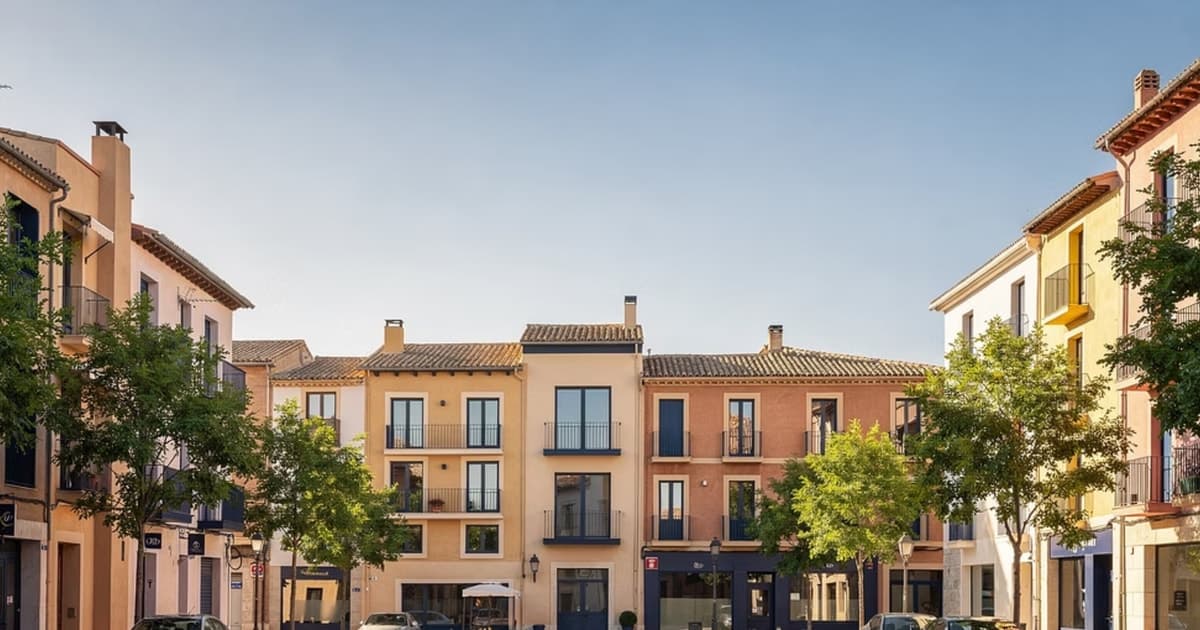
Moving to Spain: The Complete Guide for British and International Buyers
What you will learn in this guide
- Why Spain attracts more international residents than almost any other European country
- Visa options: Non-Lucrative, Digital Nomad, Golden Visa and more
- Cost of living comparison across Spain's main regions
- How to find and buy property as a foreigner in Spain
- Healthcare, schools, banking and practical first steps
Spain is one of the most popular destinations in the world for international residents. Its combination of climate, lifestyle, healthcare, culture and cost of living relative to northern Europe draws hundreds of thousands of new residents every year. Whether you are planning to retire, work remotely, raise a family or invest in property, this guide covers everything you need to know before making the move.
Why so many foreigners choose Spain
Spain holds a unique place among European destinations for international movers. A combination of factors has made it a first-choice country for retirees, remote workers, families and investors from across the world:
Climate and quality of life
Spain enjoys a Mediterranean climate along its extensive coastlines, with mild winters and long warm summers. The combination of outdoor lifestyle, cuisine, culture and social pace of life is consistently cited by expats as the primary reason for relocating.
World-class healthcare
The Spanish public healthcare system is widely regarded as one of the best in Europe and the world, ranking consistently in the top ten globally. Legal residents have access to the system and standards of care are generally very high.
Affordable cost of living
Outside of Madrid and Barcelona city centres, Spain offers a significantly lower cost of living than the UK, Germany, France or the Netherlands. Groceries, dining out, utilities and services are generally more affordable, and property prices remain competitive in many regions.
Central European location
Spain is exceptionally well connected by air and rail. From Barcelona or Madrid, most European capitals are reachable within two to three hours by direct flight. This connectivity is particularly important for expats maintaining ties with family and business contacts elsewhere.
Do I need a visa? Residency options for non-EU nationals
EU and EEA nationals can continue to move to Spain freely under freedom of movement rules. For British citizens (post-Brexit) and other non-EU nationals, a visa or residency permit is required before moving to Spain. The main options are:
Non-Lucrative Visa
Best for: Retirees and those with passive income
For non-EU nationals who have sufficient savings or income to support themselves without working in Spain. Requires proof of funds (minimum requirements change periodically — check current figures with a Spanish immigration lawyer), private health insurance and a clean criminal record. Initial visa is for one year, renewable in two-year increments. After five years you can apply for long-term residency.
Digital Nomad Visa
Best for: Remote workers and freelancers
Introduced in 2023 as part of the Startup Law, this visa allows non-EU nationals to live in Spain while working remotely for foreign employers or clients. Applicants must demonstrate they have been working remotely for at least three months and meet minimum income thresholds. The visa grants initial residency for up to one year, extendable to three years. Spain charges tax only on Spanish-sourced income for the first four years under the Beckham Law provision.
Golden Visa
Best for: Property investors and high-net-worth buyers
Grants residency to non-EU nationals who invest at least 500,000 EUR in Spanish real estate (free of mortgages). Holders do not need to reside in Spain for a minimum period, making it popular with investors. The visa covers the main applicant and immediate family members. Note: The Spanish government announced plans to review the Golden Visa programme — consult a specialist for the current status before planning an investment around this route.
Family Reunification
Best for: Family members of Spanish residents or citizens
Non-EU nationals who are spouses, registered partners, children or dependent relatives of legally resident foreigners or Spanish citizens can apply for family reunification residency. The main applicant must have held legal residency for at least one year and have a renewal already in progress.
Important: Always use a qualified immigration lawyer
Spanish immigration law is detailed and requirements change regularly. The information above is a general overview. Before making any application, consult a qualified Spanish immigration lawyer who is current with the latest rules and can review your specific situation.
Cost of living in Spain: A regional comparison
The cost of living in Spain varies significantly by region and city. The following table gives a general overview for a single person — all figures are approximate and change over time:
| Expense | Barcelona | Madrid | Valencia | Costa del Sol |
|---|---|---|---|---|
| One-bedroom apartment rent (city centre) | 1,200-1,800 EUR/mo | 1,100-1,600 EUR/mo | 700-1,100 EUR/mo | 700-1,200 EUR/mo |
| Utilities (electricity, water, gas) | 100-160 EUR/mo | 100-150 EUR/mo | 80-130 EUR/mo | 80-130 EUR/mo |
| Grocery shopping (one person) | 200-320 EUR/mo | 200-300 EUR/mo | 180-280 EUR/mo | 180-280 EUR/mo |
| Monthly transport pass | 40-60 EUR/mo | 55 EUR/mo | 30-40 EUR/mo | Car recommended |
| Private health insurance | 60-120 EUR/mo | 60-120 EUR/mo | 50-100 EUR/mo | 50-100 EUR/mo |
Figures are estimates for 2026 and vary by exact location, lifestyle and personal circumstances. Barcelona suburbs and Catalan cities outside the capital are typically 20-35% cheaper than central Barcelona for rent and general costs.
Finding and buying property in Spain
Many people who move to Spain choose to rent initially while they find the right area and get comfortable with the local market. When you are ready to buy, working with a local real estate agency makes the process significantly smoother.
The Spanish property buying process involves several specific steps: obtaining a NIE number (Numero de Identificacion de Extranjero), opening a Spanish bank account, appointing an independent lawyer, signing a private purchase contract with a deposit, and finally completing the purchase at a notary. Total costs beyond the purchase price typically amount to 12-14% of the property value, including transfer tax (ITP at 10% in Catalonia), notary fees, land registry fees and professional charges.
For a detailed breakdown of the buying process and costs, see our full guide on property for sale in Spain and explore real estate in Catalonia.
Healthcare, schools and banking in Spain
Healthcare
Spain's public healthcare system (Sistema Nacional de Salud) is available to legal residents and covers the vast majority of medical needs at no direct cost. Register at your local centro de salud using your padron certificate and NIE. Non-Lucrative Visa holders are typically required to maintain private health insurance as a visa condition. Many expats also take out private insurance for faster access to specialists and English-speaking doctors. Private health insurance in Spain is generally very affordable compared to the UK or US.
Schools
Spain has state schools (colegios publicos), state-funded charter schools (colegios concertados) and fully private schools including international schools. State schools are free and generally of good quality. Teaching in Catalonia is primarily in Catalan, with Spanish as a subject. International schools teach in English (or German, French, etc.) and follow international curricula such as IB or British GCSE/A-level. International school fees vary but typically range from 8,000 to 20,000 EUR per year. Places at popular international schools fill quickly — apply well in advance of your move.
Banking
Opening a Spanish bank account requires your passport, NIE number and padron certificate (proof of registration). Major Spanish banks with English-language services include Sabadell, CaixaBank, BBVA and Santander. Many expats also use international digital banks such as Wise or Revolut for day-to-day spending and to avoid foreign exchange fees while transferring money from overseas. For property purchases, you will need a Spanish bank account to issue a certified bank cheque (cheque bancario) on the day of signing at the notary.
How camiacasa helps in Catalonia
camiacasa is a real estate agency specialising in Catalonia, with coverage across more than 60 cities and towns throughout the region. We work with international buyers and incoming residents from across Europe and beyond, guiding them through the entire process of finding and buying a home in Catalonia.
Catalonia offers an exceptional quality of life for international residents. Barcelona is one of Europe's most internationally connected cities, but the wider region offers excellent value and quality in mid-size cities and coastal towns. Popular areas with international buyers include the Garraf coast (Sitges, Castelldefels), the Valles Occidental (Sant Cugat del Valles, Terrassa) and coastal towns north and south of Barcelona.
Our team provides bilingual support throughout the buying process, from property search and viewings to coordination with lawyers, notaries and gestoria. We can also provide recommendations for immigration lawyers, international schools, relocation services and other professional support for incoming residents.
Practical steps: Your moving to Spain checklist
Here are the key administrative steps to complete when you move to Spain, roughly in order:
Apply for your visa
Apply at the Spanish consulate in your home country. Choose the visa type that matches your situation. Allow 6-12 weeks processing time and gather all required documents before applying.
Register on the padron municipal
Within 30 days of arriving, register at your local Ayuntamiento (town hall) on the padron municipal. This is your official proof of address and is required for healthcare, schooling and many administrative processes.
Obtain your NIE number
Apply for a NIE (Numero de Identificacion de Extranjero) at a Spanish police station. This tax identification number is required for property purchases, opening a bank account and paying taxes.
Open a Spanish bank account
Open a Spanish bank account as soon as possible. You will need your passport, NIE and padron certificate. Many major banks offer English-language services. A Spanish account is essential for direct debits, property costs and tax payments.
Register for healthcare
Register with a local centro de salud (health centre) to access public healthcare if you are entitled. If your visa requires private insurance, ensure you have comprehensive coverage before arriving.
Enrol children in school
Spain has good state schools and a range of international schools. Contact the local Ayuntamiento education department for state school enrolment, or research international schools in your area well in advance as places fill quickly.
Find your permanent home
Many expats rent short-term on arrival while finding the right area. Once settled, work with a local agent such as camiacasa to find a property to buy or rent long-term that suits your needs and budget.
Frequently asked questions
Yes, British citizens can still move to Spain after Brexit, but the process has changed. Before Brexit, British nationals could move freely as EU citizens. Now they must apply for a visa or residency permit in advance. The most popular routes are the Non-Lucrative Visa (for those with sufficient savings or income), the Digital Nomad Visa (for remote workers), or the Golden Visa (for those investing 500,000 EUR or more in property). British citizens who were already legally resident in Spain before 31 December 2020 are protected under the Withdrawal Agreement and hold TIE (Tarjeta de Identidad de Extranjero) cards. New arrivals must apply from the UK before relocating.
The most affordable regions in Spain for day-to-day living are generally Extremadura, Murcia, Castilla-La Mancha and parts of Andalusia, where property prices and general costs are considerably lower than the national average. Within these regions, smaller cities and towns offer the best value. However, for international buyers who want good transport connections, English-speaking communities and quality international schools, the Valencian Community (particularly Valencia city and the Costa Blanca) and parts of Andalusia (such as Almeria) offer a strong balance of affordability and quality of life. In Catalonia, mid-size cities 30 to 60 kilometres from Barcelona such as Terrassa, Sabadell and Vilanova i la Geltru offer significantly lower property prices than the capital while retaining excellent infrastructure.
Spain has a public healthcare system (Sistema Nacional de Salud) that is widely regarded as one of the best in Europe. Once you are legally resident in Spain and registered on the padron municipal (local council register), you are generally entitled to use public healthcare. The process for accessing public healthcare depends on your visa or residency status. Those on a Non-Lucrative Visa are typically required to hold private health insurance as a visa condition. Workers paying Spanish social security contributions have automatic access to the public system. Retirees from the UK who receive a state pension can access Spanish public healthcare via the S1 form. Many expats also maintain a private health insurance policy for faster access and English-speaking doctors, particularly for specialist consultations.
You do not need to speak Spanish to live in Spain, particularly in areas with large established expat communities such as the Costa del Sol, the Costa Blanca or Barcelona. In these areas, English is widely spoken in daily life, services and business. However, learning Spanish — even at a conversational level — makes an enormous difference to your quality of life, your ability to handle administrative tasks, and your integration into local communities. In the workplace, Spanish is generally required unless you are working remotely for a non-Spanish employer. In Catalonia, both Spanish and Catalan are official languages, and most residents speak both. Government communications, school teaching and some local services may be primarily in Catalan, though Spanish is always accepted.
The best area depends entirely on your priorities. For those seeking urban life with international connections, Barcelona and Madrid are the clear choices, offering world-class culture, employment opportunities and international schools. For coastal living and a relaxed pace, the Costa del Sol (Malaga area) and the Costa Blanca (Alicante area) are perennially popular with northern European buyers. For a balance of city amenities, coastal access and more affordable prices than Barcelona, Catalonia outside the capital — areas such as the Maresme coast, the Garraf coast (Sitges, Castelldefels) or the Valles Occidental (Sant Cugat, Terrassa) — is increasingly sought after. For those prioritising pure affordability, Valencia, Murcia and parts of Andalusia offer the lowest costs. camiacasa specialises in Catalonia and can provide detailed guidance on the best areas for your specific requirements.
Planning to move to Catalonia?
Contact camiacasa for expert guidance on finding and buying property in Catalonia. We support international buyers from first search to completion.